
Responding quickly, flexibly and effectively to emergencies with cash assistance

Cash assistance raises questions and can trigger scepticism. Why we have decided to provide unconditional cash assistance in Lebanon for the first time. What we pay attention to. And why this form of aid is particularly effective and dignified.
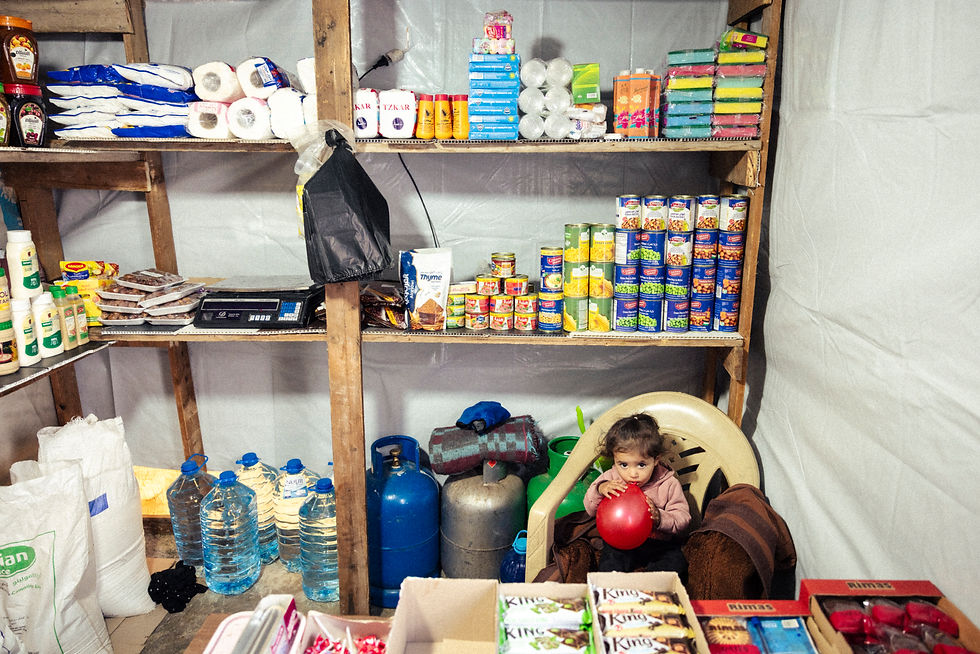
Massive destruction, a fragile ceasefire and huge displacement movements are shaping Lebanon. And all this against the backdrop of an economic crisis unlike any in the country’s recent history. The need is great, the situation confusing and insecure.
What is the best way to help in such a situation?
For years, we have seen time and again that there are situations for which no aid package is suitable. A mother whose child needs antibiotics today does not benefit from a sack of rice. A father who will lose his home in two weeks cannot pay off rent arrears with hygiene products. An older woman who is freezing in February does not need advice. She needs firewood.
It is precisely for such cases that more and more organisations — from UNHCR and the Red Cross to the Swiss Agency for Development and Cooperation — are turning to direct cash assistance. This support for particularly vulnerable families in the form of money has proven to be one of the most effective forms of aid.
What does “unconditional” cash assistance mean?
At first, unconditional cash assistance may sound as though you give a family money and then stop paying attention. But the opposite is true.
We select the families who receive help very carefully. To do this, we work with Rana, our Lebanese partner on the ground. She has often known the affected households for years and is in personal contact with them. Particular consideration is given to single mothers, older people with no income, people with chronic illnesses or disabilities, displaced families and households without other support. Every payment is documented.
What we deliberately do not prescribe is how the money is used. A family knows best whether the antibiotics for a feverish child are more urgent today, or the electricity bill whose deadline expires tomorrow. That decision is not ours. It belongs to the family.
Three concerns we take seriously
“Won’t the money be spent on alcohol and tobacco?”
This is the most common objection, and at the same time the most human one. The concern is not cynical; it is understandable. Yet studies from more than ten years of humanitarian research consistently show the same picture: families in acute need use cash assistance for the things that collapse first under pressure — food, medication, rent, school fees, debt repayment. Serious studies find no systematic misuse.
The more honest question is a different one. Why do we naturally trust people in Switzerland to spend their wages sensibly, but not people in Lebanon? People under pressure know very well what they lack. A mother whose child has had a fever for three days does not buy sweets. She goes to the pharmacy. A family freezing in February does not buy jewellery. It buys firewood.
“Doesn’t cash assistance create dependency?”
This myth, too, does not stand up to the evidence. On the contrary: cash assistance stimulates the local economy where it arrives. Families buy from the baker around the corner, the nearby pharmacy, the small shop in the village. The money stays in the neighbourhood instead of flowing into a supply chain. The Lebanese Red Cross explicitly cites this effect as one of the main reasons why it itself relies on cash assistance.
In addition, paying off rent arrears before eviction happens, or buying medication before an illness escalates, prevents dependency. Cash assistance is often what keeps a family from sliding into a spiral of debt, illness and displacement.
“Does cash assistance lead to inflation?”
This concern has been examined by economists around the world. The result is clear: cash assistance on the scale at which humanitarian organisations operate does not generate inflation. It goes to the poorest households in a region, whose overall demand is too small to move market prices. What it actually does is restore purchasing power that has been lost through the crisis.
Why we are doing it anyway
International experience is clear — UNHCR, the Red Cross, the Swiss Agency for Development and Cooperation and many others have relied on direct cash assistance for years where markets are functioning. So we are not inventing anything new. We are using what has proven effective elsewhere and adapting it to our size and our possibilities.
With unconditional cash assistance, we enable people to respond to emergencies flexibly, quickly and independently. Their needs are more individual than relief supplies can ever be. And no one knows their problems better than the people affected themselves.
As a first step, we are supporting 100 carefully selected families with 150 US dollars each. They are not everyone we would like to reach. But this is the scale at which we can work cleanly, with documentation and transparency — and at which we ourselves can learn what this form of aid means for Borderfree. If this first step succeeds, it will not be the last.
Cash assistance requires more trust from us than an aid package ever would. But it enables us to reach people in places that are currently too dangerous to enter. And it is the most effective and dignified form of humanitarian aid in a country where it is not goods that are lacking, but the ability to access them.


Comments